Archive
Using Social Media to Engage and Improve Learning in any Medical Conference.
TIME TO ENGAGE YOUR MEDICAL AUDIENCE

Over the last couple of years I have become increasingly bored and tired on how medical conferences are presented in Academic Institutions. It does not matter if it is; Morbidity and Mortality, Journal Club, Morning Report, State of the Art conference. It is always the same format. The content of the material may be great but digesting it is difficult.
It is like trying to give someone a boiled chicken thigh with no salt or spices. If you are vegetarian it would equal an uncooked piece of Tempeh. They are both good for you but good luck swallowing more than 3 pieces.
Same thing goes for these conferences. With all the tools out there, it is a true shame that we continue presenting our medical knowledge to students, residents and fellows in the same, insipid didactic forms.
OK… So what do you recommend?
I previously wrote an article about yammer and how I am using it in the Cardiology department to stimulate learning between cardiology fellows and faculty. Well now I have opened the doors to internal medicine residents and they are learning with us. In a future I would not be surprised if the whole institution is part of such network. Each subspecialty having its own groups. Each group sharing knowledge, asking questions, solving problems that any given team is just stuck upon. I will make another post in a near future on how this is working on. (I can only expect it to get better after being purchased by Microsoft for 1.2billion dollars… but in any case)
I recently had talk on a Journal Club about a particular article. One little problem… I wanted to incorporate social media in my talk to make it more interesting, more interactive. I wanted to make it “fun”. This is how I did it.
I wanted to incorporate Twitter into my Powerpoint presentation. I did some websearch aka (googled it) and I stumbled upon SAP WEB 2.0, blog created by Timo Elliott. Here he presents some templates he created in which you can incorporate Twitter into you presentation. There is no wrong or right answer on how to use it, just use your imagination, ask yourself “What could make my presentation more interesting”. This is what my powerpoint presentation looks like
1) THIS IS THE FIRST SLIDE. THE 2 ICONS YOU SEE IN THE UPPER RIGHT CORNER WILL BE PRESENT THROUGHOUT THE PRESENTATION AND TAKE ME TO THE CORRESPONDING SLIDE SHOWN BELOW (2,3). IN ADDITION I ALSO HAVE A LIVE STREAM IN ALL OF MY SLIDES THAT CAN BE TURNED ON AND OFF DURING MY PRESENTATION. AUDIENCE MEMBERS CAN SHARE THEIR THOUGHTS AT THE SAME TIME I AM TALKING. SOME MIGHT FIND IT DISTRACTING, I FIND IT AMAZING AND ENGAGING.

2) AT ANY GIVEN TIME I CAN CLICK THE TWITTER ICON ON THE UPPER RIGHT CORNER OF MY PRESENTATION AND WILL TAKE ME TO THE SLIDE THAT SHOWS THE TWEETS OF THE HASHTAG IM USING DURING MY CONFERENCE. IN MY CASE, I AM A CARDIOLOGIST AND GIVING A CARDIOLOGY JOURNAL CLUB, I NAMED IT CARDIOTWEETS

3) IN THIS SLIDE I CAN TYPE A QUESTION LIVE IN THE PRESENTATION WITH THE OBJECT BOX I CREATED. IN ADDITION I CAN ALSO CREATE ANSWERS. THE AUDIENCE LATER TWEETS THEIR VOTE AND GET THEM IN A BAR GRAPH OR PIE CHART

HOPE YOU LIKE IT AND FIND IT USEFUL SPECIAL THANKS TO TIMO ELLIOT FOR CREATING SUCH A MASTERPIECE AND SHARING IT.
HAVE A QUESTION? EMAIL ME AT: CHASSADK AT GMAIL.COM
How to Jump in the Social Media Healthcare bandwagon easily and smoothly
 More and more we are hearing about social media and the potential it has on healthcare. A trend has been picking up and many doctors already feel comfortable using these different tools PROPERLY. However, many MDs, Residents and Fellows in training are dubious and hesitant about using social media. I have been an advocate about its potential for several years now and tried to get others involved but with ambiguous success. Examples could be Twitter, Facebook, Google +, Foursquare, and even medical directed social apps like Doximity.
A recent article talks about this, published in the Houston Business Journal, “Houston hospitals, doctors infected by social media” talks about the importance of Social Media in healthcare and why more doctors should be adopting it. Well, for those of you that want to start slowly, for those that are scared about embarking in this area and are hesitant about using facebook or twitter there is a simple answer for you to test drive it. The answer is Yammer.

Yammer is a social platform that allows you create a private social network specifically for your institution, business, clinic etc. All you need is the same domain in the email and off you go. In case this is not possible an external social network is possible. By the way thanks to Nate Osit for recommending it!
An example of a way that I implemented Yammer is as a learning tool. I created a group inside yammer called “Cardiology Lounge” (being a Cardiology Fellow). In this group, residents, fellows, and faculty post questions of interesting cases, ,discussions, pictures, etc. It is creating a learning environment which is fun secondary to the interaction with each other. If you are walking in the hallway you can login to Yammer, check the group and in a few minutes see whats cooking. No useless status updates like we are sometimes exposed in facebook.
In my opinion, if you are new to social media, and want to try it slowly try out yammer. Feel Free to contact me
Twitter @christianassad
E-Mail: chassadk at gmail.com
QUANTIFY WHAAAAT? STOP XQ-SES! Start MOVING!
Warning: If you do not believe in hard work stop reading…
I always have been a health exercise oriented person and so has my family. I thank them for raising me up like these. Problem I see is most families are not raised like these and for this reason obesity has become an epidemic.
Few things about myself
1) I am a tech geek, love technology and see enormous potential in the areas of healthcare, fitness etc
2) I am getting extremely annoyed by all this quantification gadgets costing hundreds of dollars aiming at consumers to get fit. THIS IS RIDICULOUS
As I mentioned before. You already have a quantification device at home and its cheap. An Amazing Weight Scale. Use it…
Reasoning is that quantifying will help you measure yourself in order to get fit. Agree it can help in some cases but in your average “Joe” is not needed. The most important denominator in successful weight loss and health is MOTIVATION.
General Rules:
1) BURNING CALORIES + EATING RIGHT + EXERCISE = LOSING WEIGHT
2) LOSING WEIGHT = MOTIVATION = INCENTIVE TO KEEP EXERCISING
3) ALL OF THESE = IN GENERAL:
IMPROVE CHOLESTEROL LEVELS, BLOOD PRESSURE, MOOD, ENERGY LEVELS, METABOLISM
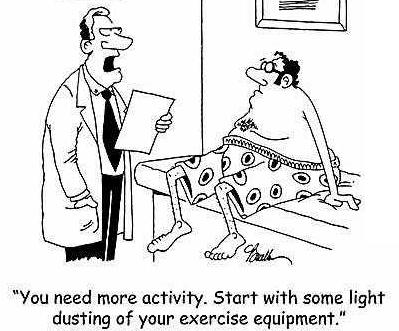 You do not need any quantification device, you don’t need to spend more. You want to give something cool for X-Mas? For a birthday? Sheez don’t give another GADGET… Give them a Can of Motivation if you know what I mean. Easier to be said than done. Agree but to prove my point that no quantifications devices are needed…
I will start an exercise regimen today. I invite you to do so also! In 3 months I’ll show why I do not believe in spending in gadgets to quantify myself. Save your money… Today I got 5 more people start an exercise routine with me.. want to join? Be it P90, P90X, INSANITY, Cross Training, Swimming, WHATEVER YOU ENJOY.,YOU NAME IT. JUST START MOVING
Need Motivation: Check http://www.beachbody.com/category/success_stories/p90x-success-stories.do
(I am in no way affiliated to beachbody. Just like the results section and believe in can help anyone)
The best gift you can give yourself for X-Mas and New Year is straightforward. Like everything in life involves hard work but the end result will be a lifechanger! Become a better you…
GOOD LUCK! Everyone can do it you just need to be pushed in the right direction!
Want to hear more?
Send me a Tweet I will help in any way I can
A Reference Manager in a Social Network
A couple of weeks ago a friend of mine @josehfloresmd recommended a reference manager that had an innovative concept. He recommended Mendeley, a free reference manager and academic social network that can help you organize your research, collaborate with others online, and discover the latest research. 
I was so impressed with it and how easy it was to use that decided to write this blog about it and try no to bore you. These are the reasons I liked it. If you read this and are into research… Give it a try.
1) Easily find and store bibliographies
2) Upload the article pdf to your account and access it from any computer, smartphone or tablet with a connection to the internet.
3) Share the articles, pdfs, etc with others in specific groups. Ex. If your research team is working on a paper they can all have access the files uploaded and modify as needed.
4) Find people with similar interests to your line of work.
5) The ease of use is impressive and the best of all it is FREE!
In brief, if you are into research and want something fresh, give Mendeley a try… I doubt youll be dissapointed.
A Tattoo that has your Medical Record?
 No, this is not a Rorschach test. What you are seeing here is a QR Code which is the abbreviation of Quick Response Code. A QR code is the “cousin” of the barcode we all know. Originally it was designed to track parts in the vehicle manufacturing scenario but smartphones have found a whole different use for this “mutated” barcodes. While a bar code can only hold 20 numerical digits a QR code is a two dimensional matrix barcode which can hold thousands of characters. Therefore they become more useful to people since they can practically link any information to a QR Code.
Anyone who wants, can create his/her own QR Code with any given information he would like to share. People as well as businesses can share Webpages, Contact Information, Business information, etc. you name it.
An interesting phenomenon is happening among young people which I have been witnessing more and more and that is QR Tattoos. At first it sounds like another weird way to grab attention but it has the potential to be another option to have your medical record always with you in my opinion. Creating a QR Code is simple. Just google “make QR code” and you’ll find several options, free and those with a price tag. Your QR Code has the potential to share any type of information, so why not a medical record? No such thing exists or at least that I am aware of, but, in a near future, with a little work, you could practically link your QR code to your medical record. With little imagination you can see how useful this could be and even how a tattoo could save your life.
For those of us that do not like tattoos maybe this could change our mind 😉
Anyways just food for thought!
Test your Medical Knowledge on a Virtual Patient before a Real one
The way knowledge has been taught to medical students over the last couple of decades has not changed much. The medical student basically has to sit down, read for countless number of hours and then try to incorporate his knowledge to the hospital setting with the help of residents, faculty, and fellows. Yes, I know, I have simplified things too much but hey, I am a “Keep it simple Kinda guy”…
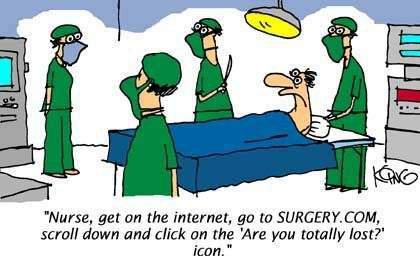 More recently, over the last couple of years we have seen how technology has been changing the way we practice and learn medicine. Now, when rounding in a hospital “everyone” has a smartphone, tablet, or netbook that gives the information in a heartbeat. Those that do not, likely can access the information from a nearby computer. All this is truly amazing but, if you were an intern once; Do you remember what was your first day like? Every medical student that is in a Residency program had to sit down countless amounts of hours in order to get there, but nothing prepared them really for that first day. That first day when you are on call and your beeper starts ringing. Dr. Butterfinger, my patient has chest pain, EKG changes and machine reads STEMI (ST Segment Elevation Myocardial Infarction). What do you want to do? From one day to another everything changed. Before this day you were the one sitting with the audience, enjoying the show. Now you are the one (in part ) making decisions that will directly impact someones life. Gulp….
And so comes the “July Effect”. The July effect is a hypothesized scenario in which changes in training hospitals occur. Medstudents becoming 1st year residents or interns, and interns becoming residents and therefore “head” of the team. Some say July is the worst time to be in the hospital some do not agree. Different studies are out there but a recent one got the eye of the News, it was a publication in the Annals of Internal Medicine : “July Effect”: Impact of the Academic Year-End Changeover on Patient Outcomes. A Systematic Review which concluded with “ Mortality increases and efficiency decreases in hospitals because of year-end changeovers, although heterogeneity in the existing literature does not permit firm conclusions”. It is an interesting read and recommend it to anyone but the point is not to discuss this, the point is what follows.
What if you could practice your medical knowledge before you became an intern? Simulators out there exist but lets face it they are not very appetizing to the users. You have books, interactive tablet books, software etc with a similar mechanism as the “Choose Your own Adventure” type of books we read as kids but thats about it.
Here is where Second Life a free 3D virtual world where users can socialize and connect, could have an important role in medical education. Imagine the following scenario. You read about treatments for Diabetic Ketoacidosis, Respiratory Failure, STEMI, Pulmonary Edema, Heart Failure etc you name it. Once you read about it instead of having your usual, boring and annoying test your test becomes a 3d Virtual game where you get to exercise your knowledge. Far more interactive and realistic than a couple of questions. This will stick better to your brain and you will be less likely to forget it (Use it or Lose it) So instead of having a Multiple Choice Test on the subject have a 3D Virtual Test! It’s kind of a Gamified Test! Still do not get the picture? Here take a look at the following link by Second Health which have done an amazing job.
I am aware this has been present for years, which in my opinion, makes it more surprising that we have not incorporated it to a teaching setting.
Hey Doc, Think your twitter account got hacked.
 It is no news that any account can be hacked. In the past we have seen multiple celebrity twitter accounts being hacked and just today we saw Fox News Political Twitter account being hacked. An account with 34,000 followers hacked spreading false news about President Obama being shot… Once this false news was tweeted it got retweeted y 100+ people. A very distasteful rumor was being spread fast but thankfully got caught on time.
Ok, new, different scenario. How many times have you seen someone forgetting to logout of a facebook account? Twitter account? Any account? Multiple times I have witnessed pranks played on such accounts in the hospital or different settings. Before it was no big issue but as people start using SoMe more in professional way, the fact that someone can post an inappropriate remark or picture on your account can place you in an uncomfortable position and create a need to clarify the scenario to the people that “follow” you.
Just a quick reminder to all of you logging in public computers. Make sure your username and passwords are not remembered. Use difficult passwords and change them often. Ex. Su$him@kiz%. At least that was one of mine in the past and I change them often.
It may be uncomfortable but It would be more uncomfortable having someone posting embarrassing fake posts in your twitter or facebook account and then needing to clear it up to your followers. I have seen this multiple times in public computers in hospitals.
A very cool Hacked Infographic was presented to me recently: The data presented is very interesting and might waken up some people 😉 http://www.onlinecollegecourses.com/hacked

Workouts R DEAD. Time for FUNouts and VANouts
 In a recent post I mentioned on how healthcare professionals recommend their patients working out 3-5 times per week. The reasons behind it are; improve glucose control, hypertension, cholesterol levels, and weight just to mention a few. All extremely important points, so… Why is it so hard to get patients to exercise?
I have the answer now. It is not difficult to convince patients to exercise. It is difficult to convince anyone to do so. Yes, it depends on the place you live in, but in general, it is difficult to get people to start doing something if they do not have this habit.
I recently started a health/fitness campaign in my institution called “MoveYourGlute”. Guess the name is self explanatory. I have been trying to get people to exercise and with all honesty it is more challenging than I thought. What I came to realize is that even convincing my colleagues to workout is a difficult task. It would be logical to assume that it would be easy to get my friends and colleagues to workout right? Well, think again. I have been trying to do this for 3 weeks now and even though I got 114 people enrolled in the group. Out of those I can say 15 are working out appx 3 times a week when they did not do it before. But, one important point needs to be highlighted. I did not get them to workout I got them to do FUN activities (Keypoint #1) Today for the first time nurses and students started asking me “What is the deal with this” and their final answer was “This is Great” so word is spreading around, slowly but surely.
Key points from my experience so far: Before we proceed let me define two concepts that I came up with
– FUNout= An exercise that is fun and enjoyable to do
– VANout= An exercise that you do because you want to look good. You want to be attractive and while doing so you are also becoming healthier.
1) Activity needs to be fun, if not it becomes a chore. It becomes more work in an already busy day and therefore doomed to fail. I like to run but many do not enjoy it, they do not see it as FUN experience, and due to this reason I only got 3 people to run with me so far. I will keep trying and keep you posted.
2) So what now? Make it FUN! I incorporated Beach Soccer, Ultimate Frisbee, Volleyball, Flag football, Basketball and still asking for opinions and the response increased. Word is getting out now. People are asking me about the program and want to add more people to join.
3) Someone needs to be the SOUL, the LEADER of the group at least in the initial phase. If you do not have someone pushing others at first this will not happen. I consider myself a fun intense person and this has helped me create a group. I may be annoying to some but my final goal is HEALTH so forgive me if I don’t care about their opinion.
4) Last but not least… Do not underestimate the power of VANITY. Vanity is one of the most powerful incentives for someone to workout that I have witnessed over  the years… I know few people that workout to improve cholesterol, glucose, htn, etc but know 100s that workout to be in shape. As superficial as it may sound, everyone or at least almost everyone wants to look good. Looking good makes you feel good and feeling good makes you want to workout more leading you to a VANcycle. Maybe the goal that we set for someone should not be a number in their labs but how they will look in 3,6,12 months??? How much time can they endure an Activity that is fun for them? As Ray William Johnson would say “ Hey, I’m just saying…”
In Summary, it is difficult to incorporate workouts to the lifestyle of people who don’t have this habit. Few people want to work more after work and that is basically what a workout is, more work to be in shape. Not very appetizing or attractive is it? Therefore FUNouts or VANouts are likely to be better options. Healthcare providers have tried for years to improve health for everyone, not only patients. From my experience we as doctors have failed miserably in getting patients to workout and implement a healthier lifestyle when they never have done this before. Maybe its time to change our approach. As you can see I am currently working on this and hoping to figure out a better way to get my colleagues to workout. In a future, the idea is to incorporate patients into the equation and have healthcare providers and patients push each other to be in better shape and therefore healthier.
I Could be Naive and know many could think I am crazy. If that is the case this would not be the first time I get that, and it will not be the last time I prove them wrong.
It is simple… Not one person wants to WORK all their life but almost everyone wants to have FUN and look GOOD all their life. Therefore stop with the workouts and start with the Funouts or Vanouts!
So… What do you want to look like in 3 ,6, 12 months?
Some Sites that kind of share my opinion:
http://skinnymom.com/do-you-exercise-for-vanity-or-health/
http://drdalearcher.com/imjustsayin/Health-or-Vanity
http://www.thatsfit.ca/2010/09/17/vanity-as-fitness-motivation/
http://www.marksdailyapple.com/health-vanity/
E-Cigarette: “But DOC! I am not Smoking I am Vaping”
There is little data on Electronic Cigarettes aka E-Cigs in medical literature. For those not too familiar with the E-Cigarette, it is basically a vaporizer the size of a cigarette. As the FDA described it in their website “Electronic cigarettes are products designed to deliver nicotine or other substances to a user in the form of a vapor. Typically, they are composed of a rechargeable, battery-operated heating element, a replaceable cartridge that may contain nicotine or other chemicals, and an atomizer that, when heated, converts the contents of the cartridge into a vapor” Today I learned from someone that uses an E-Cigarette a new term and that is that the act of using an E-Cigarette is not smoking but VAPING. I got curious about the concept and decided to look in Pubmed for medical literature and this is what I found.

There are limited studies to draw conclusions about Vaping. Question is; Is it reasonable to assume that vaping is better than smoking? I mean, approximately over 4000 chemical compounds are created by burning a cigarette, of these; it is known that many are toxic and/or carcinogenic. In the other hand recent publications have found that e-cigs contain carcinogens such as nitrosamines and diethylene glycol, an ingredient in antifreeze.
In the FDA webpage you can find Concerns that they have about E-Cigarettes;
1.- FDA found significant quality issues that indicate that quality control processes used to manufacture these products are substandard or non-existent.
2.- Cartridges labeled as containing no nicotine contained nicotine and that three different electronic cigarette cartridges with the same label emitted a markedly different amount of nicotine with each puff.
3.- Concerns that the marketing of products such as e-cigarettes can increase nicotine addiction among young people and may lead kids to try other tobacco products.
All very valid points if you ask me, I am particularly concerned about #3.
Recently the FDA issued a letter to the Electronic Cigarette Association inviting electronic cigarette firms to work in cooperation with the agency toward the goal of assuring a lawful marketing approach.
Searching for more information in PUBMED brought the obvious. More studies need to be done in order to say that Vaping is better, equal, or worse than Smoking for several reasons. As mentioned above Vaping has also shown to have carcinogens but nowhere near the 4000 chemical compounds.
So as for what the future holds for vaping it is still uncertain. So as someone who has seen family members and friends being unable to stop smoking after trying all the possible medications out there; chantix, bupropion, nicotine patches, nicotine gum, etc. Would it be wrong or irresponsible of me to tell them to try electronic cigarette instead of a normal one? Vaping is not free of risk but is sure sounds like a good option for those that have tried approved options and have been unsuccessful.
What do you think?
Being new to social media and maybe being extra careful. I will say that until further studies are done, VAPING is not a recommended treatment or option to stop smoking… but it sure sounds better to me than the latter.
This post was done several months ago, but now got revived recently. Wanted to see if I could get different opinions or experiences! Thanks!
Bibliography
http://www.fda.gov/newsevents/publichealthfocus/ucm172906.htm
Am J Prev Med. 2011 Apr;40(4):472-5. Electronic cigarettes as a smoking-cessation: tool results from an online survey. Siegel MB, Tanwar KL, Wood KS.
Addiction. 2011 May 18 [Epub ahead of print]Electronic cigarette: users profile, utilization, satisfaction and perceived efficacy. Etter JF, Bullen C.
Nicotine Tob Res. 2011 May 12. [Epub ahead of print] Interviews With “Vapers”: Implications for Future Research With Electronic Cigarettes. McQueen A, Tower S, Sumner W.
Patients should Exercise 5 times per week. How about you, Doctor?
 As usual, many of my post Ideas occur when I am rounding in the hospital. Today was no different.
Went in Mr. (X)’s room and we started talking about his blood pressure control. He told me he was taking all of his medications. Half way through our conversation he told me “I have to be honest Doc, I did not follow my PCP’s recommendation 100%”. I asked what did he mean with this and he replied “ I have not been working out 5 times per week”. I answered laughing “ More than 50% of the doctors I know don’t work out at all”.
As a Doctor, I know this is challenging and even more so with our hectic schedule, but there is something I strongly believe and that is -> PRACTICE WHAT YOU PREACH. How can a doctor tell a patient to lose weight, do exercise, and follow a diet when he does not do so himself?
This got me starting another SoMe Experiment; I called it the MOVEYOURGLUTE Experiment. So today I started. The first thing I tried was to get my colleagues to run with me, get them to exercise, lose weight, eat better, etc.
So while walking in the hospital and saw someone, I explained briefly and tried to make them exercise today with me and start a routine.
I share with you the initial Responses I got:
– 5/40 approximately said -> Count me in. 12% will run with me today
The Rest
– “Naa I exercise already” (I wanted to respond “ I do not see how” but well who am I to judge) I insisted a little more did not work
– “My back hurts”
– “My feet hurt after I run”
– “I have little free time and I would rather relax and watch TV”
– “I want to sleep more than I want to exercise”
All valid points, but we have to remember this is exactly how our patients feel. So how do WE change? How do WE modify these feelings? How can WE get a patient to follow an exercise routine, a diet, when most of us have difficulty doing so?
We as physicians have to understand the implication of telling them what working out 5 days per week means. Want to cut it short? How about 3 days?
Today I start the #Moveyourglute Experiment. Speaking with nurses, medical students, residents, fellows, faculty and trying to make them exercise. Today some could understand the implication and discipline it takes to work 3 days a week, or 5 days a week and hopefully pass the knowledge to their patients.
Thanks for Reading and do not forget to MOVEYOURGLUTE 😉
Update: Went running with 3/5 out of the 40 that I asked. Total of 4 miles and excellent experience. The rest of my colleagues, well guess they were NON-COMPLIANT with my recommendation ;). Tomorrow will be another day

Christian Assad, MD Interventional Endovascular Cardiology

TikTok Humor

Videos

Amazon iFastLoCa Keto List

 El Rincon del Dr. KakaWate
